
Long-term forecasting
Projecting Your Financial Horizon
Welcome to the Earnings Report future value calculator, your forecasting engine for projecting long-term investment growth. During earnings season, securing short-term profits is only half the strategy. Reallocating those gains for long-term compounding is what builds lasting wealth.
Whether you are analyzing a one-time lump-sum deposit or modeling recurring contributions, understanding how your capital scales over time is a cornerstone of financial planning. This calculator removes the guesswork and shows what your current capital could be worth years from now.
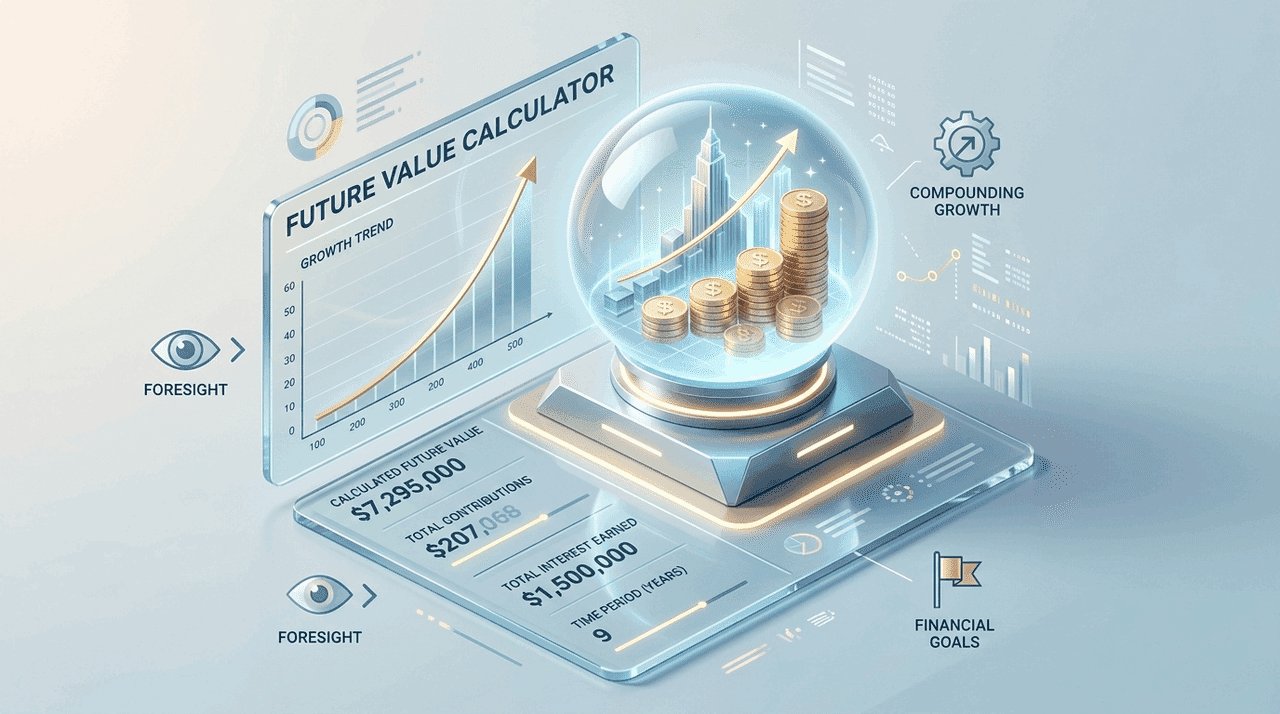
See every dollar at work
Dynamic Wealth Visualization
What makes our forecasting engine superior to a standard spreadsheet? We designed this future value calculator to provide deep visual insights and track every single dollar:

- Visual Growth Chart: A color-coded vertical chart tracks your starting amount, periodic deposits, and compound interest across the selected timeline.
- Granular Data Table: The period-by-period compound schedule details each start balance, deposit, interest amount, and end balance.
- Instant Percentage Breakdown: The balance composition bar shows the exact weight of principal versus compound growth.
Five inputs, one live projection
Simulating Your Investment Journey
Enter your variables in the Growth assumptions panel. Every result on the right updates as soon as an input changes.
Set the Timeline
Enter the Number of Periods (N) your money will remain invested in the market.
Define Initial Capital
Input your Starting Amount (PV) to establish your baseline investment portfolio.
Determine the Growth Rate
Enter your expected Interest Rate (I/Y) as a percentage based on historical market returns.
Add Recurring Contributions
Input your Periodic Deposit (PMT) amount if you plan to add funds on a regular schedule.
Select Payment Timing
Choose whether your PMT is made at the Beginning or End of each compound period. Your projected balance updates immediately.
Built for practical planning
Ideal Users for This Projection Engine
This future value calculator supports several common ways to plan, reinvest, and save toward long-term goals.

Retirement Planners
Use this fv calculator to project how monthly index fund deposits can grow over decades.

Earnings Report Traders
Allocate profits from successful earnings volatility plays into long-term accounts, then forecast the baseline compounding of those funds.

Savings Strategists
Compare savings rates and contribution frequencies to plan for a specific financial milestone.
The math, clarified
Common Questions on Compounding
Q1What is the underlying future value formula?
The core formula for a single sum is FV = PV * (1 + r)^n. Because this tool also factors in periodic deposits made at the beginning or end of periods, the full calculation is more complex.
Q2Why does the PMT timing matter?
Contributions made at the beginning of a period have more time to accrue interest than those made at the end. The timing toggle keeps projections accurate.
Q3Can I use this for simple interest?
This calculator is optimized for compound interest, reflecting how modern investment accounts, savings, and brokerage portfolios operate.
Q4How does the Compounding Model help me?
It defines the math as PV growth plus recurring PMT, separating contributed capital from interest earned.
Q5Can I change the compounding frequency?
The standard setting uses annual compounding, but you can adjust the rate and periods to reflect monthly schedules.
Q6Is this only for stock market returns?
No. It also works for savings accounts, bonds, real estate appreciation, and other assets with consistent compound growth.
Q7How does this compare with the Rule of 72?
The Rule of 72 estimates doubling time, while this calculator provides exact period-by-period dollar amounts.